Tuesday, February 7, 2012

Switch Opens - Joint Crash

Switch Opens
Joint Crash
Transubstans Records

Two years after the release of their self-titled album (Which was their four effort after releasing three under the name of Fingerspitzengefühl), Swedish (Stockholm) based outfit Switch Opens are back with their long awaited fifth effort ‘Joint Crash’ with their new label Transubstans Records.
In terms of direction and sound, Switch Opens (Who comprise of vocalist/bassist Jesper Skarin, guitarists Tomas Bergstrand and Mikael Tuominen and drummer Anders Bartonek) haven’t strayed too far from where they last left things on their previous album, with the bulk of ‘Joint Crash’ still based firmly in the progressive/psychedelic stoner rock realm. But as evident last time around, Switch Opens isn’t the kind of group to stick to the rules that most follow, with plenty of unexpected twists amongst the familiar, helping to give the band a sound that’s not entirely easy to pin down.
The opening track ‘Square’ sees the band starting off proceedings in a slower pace with some huge booming riffs and some heavy presence from the bass that’s constantly underpinning the whole song. But it’s when the vocals kick in that Switch Opens show some real change from their former sound, with the verses showcasing a far cleaner and melodic side to Skarin’s vocals, which is quite a departure from his tougher and bellowing growls. The clean vocals add a hypnotising/mantra-like effect to the song, which is perfectly offset with the heavier riff sections where the band really turns things up.
The follow-up track ‘Mirror Man’ is a little more straightforward sounding for the most part, with the band delivering their trademark stoner rock sound mostly throughout the song. But that’s not to say there isn’t a twist here and there, because there’s a distinctly psychedelic touch added to the guitars to give the song a slightly ‘70’s vibe (Much in the same way that The Atomic Bitchwax have done for years), while the addition of chaotic saxophone sounds around the middle helps inject a bit of unhinged experimentation to the whole equation.
‘Pompous Pumping Heart’ is a definite favourite on the album with Skarin putting in a great vocal performance with his newly unearthed cleaner efforts, while the song’s overall transition from the quieter and more foreboding vibe of the start, towards a heavier and densely guitar driven conclusion sounds like a natural shift of mood over the course of its epic lengthy running time.
Both the riff drenched ‘Freak Sect’ and the primitive drive of ‘Chemistry’ could have easily been mistaken as cuts from the band’s last release, barring the injection of huge melodic choruses that really make the songs stand out, while the spacey and hypnotic ‘Like Fire’ is a bizarre experiment that combines monk-like chants over a guitar soundtrack that brings to mind Soundgarden’s ‘Searching With My Good Eye Closed’ (From 1991’s ‘Badmotorfinger’).
But the real gems on Switch Opens’ latest release are found towards the end. On ‘The Reunion’, the band really stretch out their sound to allow keyboards to add depth to what is otherwise an epic nine minute spaced out jam, while the closing title track ‘Joint Clash’ sounds unlike anything the band have ever attempted before, with song retaining its calm demeanour and vibe throughout, and the harmony vocals taking the lead rather than the guitars.
On ‘Joint Crash’, Switch Opens have remained true to the sound that was heard on their last album, but pushed the experimental elements further afield to give their sound greater space to move around in.
Apart from a shift in greater experimentation, the band’s song writing has also come a long way, with none of the eight compositions overstaying their welcome, despite their lengthy running times.
In the end, ‘Joint Crash’ is far more interesting, thought provoking and memorable than the band’s last release. And as far as I’m concerned, that ticks all the right boxes in my book. ‘Joint Crash’ therefore comes highly recommended.

For more information on Switch Opens, check out - http://www.switchopens.com/

© Justin Donnelly

Monday, February 6, 2012

Stéphan Forté - The Shadows Compendium

Stéphan Forté
The Shadows Compendium
Listenable Records

Over the last ten years, Stéphan Forté has been forging a reputation as a formidable guitarist in the French progressive/symphonic metal act Adagio. But with Adagio enjoying some downtime since the release of ‘Archangels In Black’ (2009), Forté has seized the opportunity to branch out on his own, with ‘The Shadows Compendium’ Forté’s long awaited solo release.
Those familiar with Forté’s work within Adagio will have some idea of what to expect here, albeit in instrumental form. For those unaware, Forté’s specialty lies within the progressive/neoclassical metal/shred realm, with influential greats such as Joe Satriani, Yngwie J. Malmsteen and Jason Becker evident in the album’s eight tracks.
The opening title track ‘The Shadows Compendium’ (Which features Adagio’s Franck Hermanny on bass) is a perfect example of Forté skills and talents on the guitar, with the mid-paced number boasting plenty of shredding guitar work and intertwining riffs that will have budding guitarists frothing at the mouth. But what really stands out more than anything else is his ability to craft a guitar instrumental that really works as a song in its own right, which is a real testament to Forté’s song writing. Ex-Nevermore guitarist Jeff Loomis provides some guest guitar work on this track, but given that his style blends seamlessly alongside Forté’s own playing, it’s hard to pinpoint who does what and when. Under normal circumstances, that could well be an issue. But with a song as strong as ‘The Shadows Compendium’, it’s a perfect match of both style and sound.
The clash of styles between Forté and guest guitarist Matthias IA Eklundh (Freak Kitchen) is far more noticeable on the follow-up track ‘De Praestigiis Daemonum’, and works at providing some real fireworks on the faster paced shredding metallic number, while on ‘Duat’, ex-Eidolon/Megadeth guitarist Glen Drover puts in a stunning performance in tandem with Forté to produce one of the album’s real standouts.
Elsewhere, both Forté and Derek Taylor delve into more melodic progressive territory on the memorable ‘Sorrowful Centruroides’, while Daniele Gottardo rip it up in heavier fashion on the darker and complex ‘I Think There’s Someone In The Kitchen’.
But while the album does have several guests, it’s not all about the guests, with Forté proving that he can deliver the goods on his own on tracks such as oriental/neoclassical based ‘Spiritual Bliss’, the lightning paced/shredding ‘Prophecies Of Loki XXI’ (Which features some great classical piano work) and the album’s closing reinterpretation of Beethoven’s ‘Improvisation On Sonata No. 14, C # minor – Op. 27, No 2’.
Despite his growing status within guitarist’s circles, Forté has confined his talents within Adagio over the last decade. But with ‘The Shadows Compendium’, Forté has successfully managed to step out of Adagio’s shadow, and thrust himself into the spotlight with his reputation as a guitar great and a first class songwriter firmly intact.

For more information on Stéphan Forté, check out - http://www.stephanforte.org/

© Justin Donnelly

Iced Earth - Dystopia

Iced Earth
Dystopia
Century Media Records/E.M.I. Music Australia

When vocalist Matt Barlow rejoined the ranks of Iced Earth in 2007 after a four year absence, I couldn’t help but feel that the reunion wouldn’t be a long one. And not surprisingly, within four years, and after one album (2008’s rather patchy ‘The Crucible Of Man: Something Wicked Part 2’), Barlow decided to step down from the front man role, leaving many fans shaking their heads at what appeared to be a never-ending downhill slide for Iced Earth. But no sooner had Barlow bowed out, guitarist/backing vocalist/group mastermind Jon Schaffer announced his replacement in Into Eternity vocalist Stu Block. Given the progressive/melodic death metal sound of Into Eternity, the departure of Barlow for a second time and the less than impressive previous efforts with vocalist Tim ‘Ripper’ Owens at the helm (2004’s ‘The Glorious Burden’ and 2007’s ‘Framing Armageddon: Something Wicked Part 1’), the odds of Iced Earth redeeming themselves with an album that matched their former classic were definitely not in their favour.
But lo and behold, with ‘Dystopia’, Iced Earth (Who now comprise of Block, Schaffer, lead guitarist Troy Seele, bassist/backing vocalist Freddie Vidales and drummer Brent Smedley) has well and truly come back with a vengeance, and produced an album that’s easily the strongest effort since 2001’s ‘Horror Show’.
Despite a lengthy military-like start, the opening title track ‘Dystopia’ sees Iced Earth taking a step back with a sound that echoes the fast paced thrashing power metal sound of their past, but with an added sense of aggression that has been absent from the band’s last three releases. But outside Schaffer’s trademark fast riffing and the tight rhythm Iced Earth section of the present, it’s Block that really steals the show. Incredibly, Block puts in a near perfectly Barlow impersonation on the lower growls, as well as producing the impossibly high screams that Owen was known for. Versatile enough to cover the best of both worlds and still distinctive enough to stand out on his own, Block is nothing short of the perfect front man for Iced Earth.
The slower paced ‘Anthem’ is deceptive with its ballad-like introduction as it turns out to be a fairly heavy slab of progressive power metal with an infectious anthem-like chorus, while the fast and venomous pair of ‘Boiling Point’ and ‘Days Of Rage’ are full on thrashing efforts, full of speed and rage. Despite the later pair coming across as the album’s weakest efforts overall, Block’s vocals and Schaffer’s tight knit riffing does at least stand strong compared to the workman-like weaker sounding efforts heard on the band’s last few albums.
While there’s an overall darker lyrical tone throughout ‘Dystopia’, as evident in the hard hitting ‘V’, the gloriously huge anthem ‘Dark City’ and the equally impressive Iron Maiden-like galloper ‘Equilibrium’. But there’s a sense of optimism in amongst the album’s darker tones, most notably in the semi-acoustic power ballads ‘Anguish Of Youth’ and ‘End Of Innocence’.
Finishing up the album is ‘Tragedy & Triumph’, which is not only the albums longest running track, but also undoubtedly one the albums finest as well. ‘Tragedy & Triumph’ may not be anything ground breaking from what you would otherwise expect from Iced Earth in the song writing sense, but its sharp riffing, strong melodies and huge sing-a-long choruses are just the kind of thing you want from an Iced Earth anthem.
After some less than stellar efforts, and an ever changing line up over the last decade, it’s great to hear some inspiration within Schaffer’s song writing, and with a front man who’s able to really give the band what it needs on the vocal front.
After spending the better part of the last decade merely pretending to be themselves, it’s good to see Iced Earth is finally back.

For more information on Iced Earth, check out - http://www.icedearth.com/

© Justin Donnelly

Friday, February 3, 2012

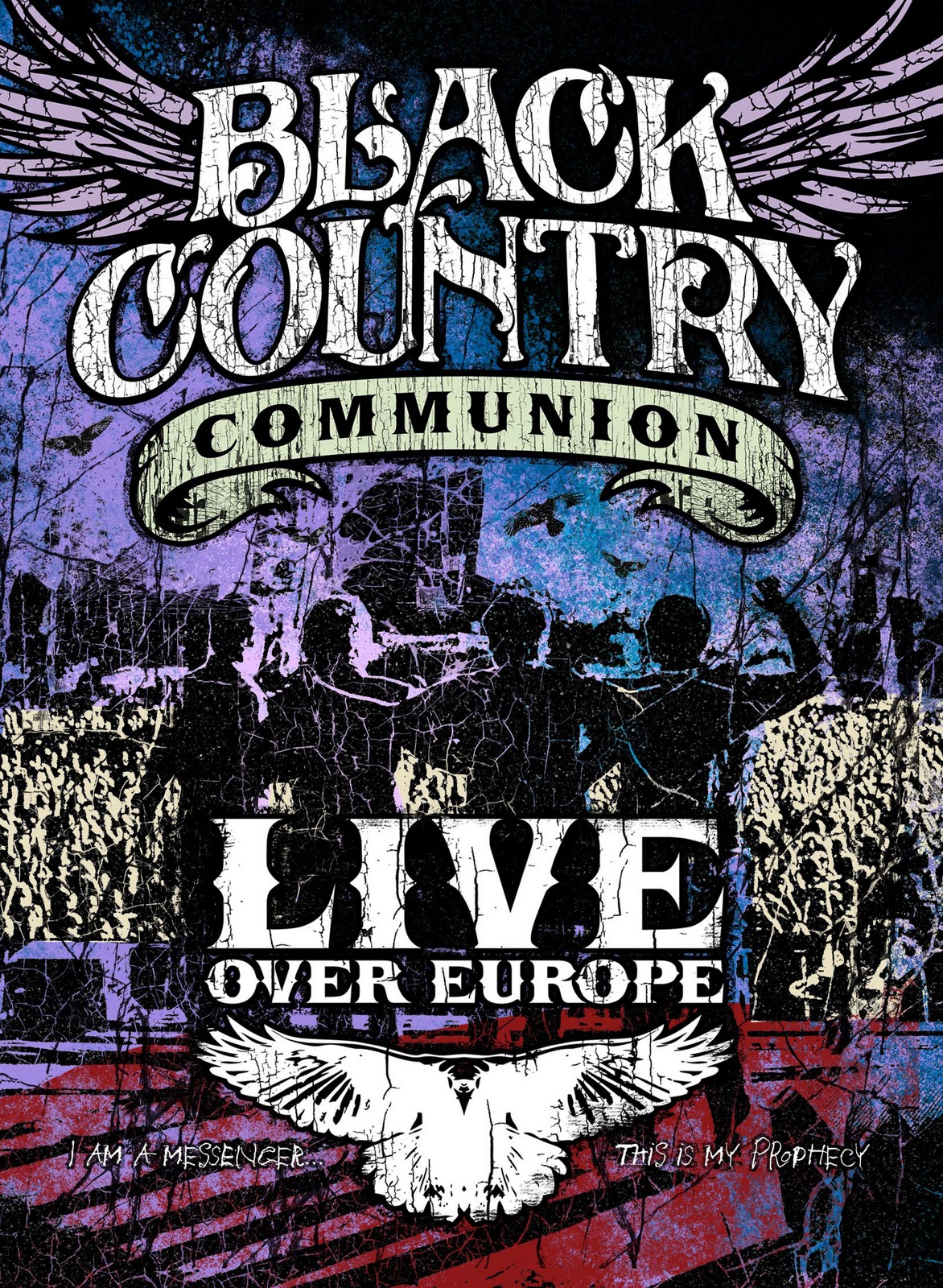
Black Country Communion - Live Over Europe

Black Country Communion
Live Over Europe
J&R Adventures/Fontana Distribution

From the moment Black Country Communion announced their formation, the supergroup has hit the ground running, releasing two albums (2010’s self-titled effort and 2001’s ‘2’) in less than two years.
But while some all-star groups focus most of their attention on studio work, Black Country Communion have only seen their studio albums as telling half the story, with the band undertaking tours of both the U.S. and Europe, which has proven beyond any doubt that Black Country Communion is more than a studio project made up of classic rock legends. With the band taking a break from playing live, and just prior to hitting the studio in preparation for a third studio release, Black Country Communion have released their first live D.V.D. ‘Live Over Europe’ to tide fans over.
Recorded over three nights in July 2011 while on tour in Germany (The band filmed in Munich, Berlin and Hamburg), ‘Live In Europe’ is a testament to the chemistry that exists within the four piece outfit live (Who comprise of ex-Deep Purple/Black Sabbath vocalist/bassist Glenn Hughes, lead/rhythm guitarist/vocalist Joe Bonamassa, ex-Dream Theater keyboardist Derek Sherinian and drummer/backing vocalist Jason Bonham), and that classic hard rock is alive and well in the hand of these seasoned musicians.
After a two minute intro (Which features the musical piece ‘Revolution Of The Machine’, which was written by producer Kevin Shirley and Jeff Bova), the band hits the stage with ‘Black Country’. Captured with fourteen cameras, and dark in tone (The lighting in the club is kept to a minimum), the footage is quite gritty and artistic in its presentation (Some out of focus shots, quick cuts and odd camera angles), and doesn’t really allow the viewer to feel like their part of the concert. Making things worse is the small snippet of interview footage that crops up almost immediately after the opening riff to the first song. After watching ‘Black Country’, my expectations for the remainder of the D.V.D. weren’t as high as they were before.
But thankfully, things really improve with the follow on tracks ‘One Last Soul’, ‘Crossfire’ and the Led Zeppelin-like ‘Save Me’ (All of which were shot in a club in Munich), with the editing taking on a more free-flowing effect, and all the magic of the band’s live show brought out in all its glory.
The move to an outdoor stage (In Berlin) for the following two songs does throw the viewer a little (Especially given that the band are playing in daylight), but in terms of performance, Black Country Communion is flawless. Bonamassa is positively stunning on the classic ‘The Battle For Hadrian’s Wall’, and Hughes proves he’s the ultimate front man on the riff heavy ‘Beggarman’.
The remainder of the D.V.D. comes from the band’s performance in Hamburg (Again, outdoors and in the daytime), and it’s at this show where you get a real feel of the chemistry that flows through the four man act onstage. Again Bonamassa is a stand out with his own track ‘The Ballad Of John Henry’ (Which boasts an amazing Theremin solo!), where he exudes an incredibly cool composure while cranking out some killer riffs (Something he manages to do throughout the whole D.V.D.), while Hughes takes on the role of rock legend, and putting on phenomenal performances on ‘Cold’, the driving funk stomper ‘The Outsider’, ‘Man In The Middle’ and a cover of Deep Purple’s classic ‘Burn’.
Apart from the concert footage (Which runs for close to seventy minutes), ‘Live Over Europe’ comes with a few bonus features, with the first being ‘Forging BCC – The Making Of Live Over Europe’. Over its twenty-five minute duration, all of the members of the band (Including unofficial fifth member Kevin Shirley – Black Country Communion’s producer and mixer) tell the story of the band’s formation, getting to know each other, the writing process, the ideals behind the group and touring/playing live. Although short, the documentary is well put together, and a worthy addition to the D.V.D.
Outside of the documentary, there’s a ‘Live On Tour’ photo gallery (Close to forty shots) and a ‘Behind The Scenes’ photo gallery (A little over thirty pictures).
While some of the live footage is a bit questionable at the start, and the small snippets of interview footage dotted within the live show are annoying and unnecessary (Especially given that they all turn up in the documentary itself), ‘Live Over Europe’ is a great live release from Black Country Communion is a must have for fans of the lads from the black country.

For more information on Black Country Communion, check out - http://www.bccommunion.com/

© Justin Donnelly

Vallenfyre - A Fragile King

Vallenfyre
A Fragile King
Century Media Records/E.M.I. Music Australia

For Paradise Lost guitarist/founder Gregor Mackintosh, 2009 was anything but a good year.
While on tour with Paradise Lost (Who had just started touring off the back of 2009’s ‘Faith Divides Us – Death Unites Us’), Mackintosh received the news that his father (John) was diagnosed with terminal cancer with only weeks to live, and decided to take a leave of absence from the band to spend time with his father.
As expected, Mackintosh’s father passed away soon after, leaving Mackintosh mourning the loss. In a way to help with the grieving process, Mackintosh turned to music, and starting writing and recording some of his ideas purely as a way to express his loss and a way to cope with his emotions.
Over time, Mackintosh started to hear something in the music he had written, and decided to take the project beyond a personal venture.
Assembling some well known friends in My Dying Bride lead/rhythm guitarist Hamish Hamilton Glencross, rhythm guitarist Mully, Doom/Extinction Of Mankind bassist Scoot and ex-At The Gates/Paradise Lost drummer Adrian Erlandsson, and taking on the vocals and lead guitarist himself, Vallenfyre officially came into being midway through 2010.
After releasing a limited edition seven inch single in late 2010 (Through Imperium Productions), the band signed a deal with Century Media Records, with ‘A Fragile King’ the band’s highly anticipated debut full-length release.
So why is there so much excitement for this release? Well apart from the names attached to the line-up, Mackintosh stated that musically Vallenfyre would be a throwback to his early doom/death metal days. And he wasn’t fooling, because ‘A Fragile King’ is as old-school as it gets.
The opening track ‘All Will Suffer’ is an absolutely crushing track that is equal parts doom and death metal, but with a strong groove throughout. Mackintosh’s riffs are suffocating, oppressive and heavy, while his vocals bear a striking resemblance to a deeper Nick Holmes (Paradise Lost) from around the ‘Gothic’ (1991)/‘Icon’ (1993) era.
‘Desecration’ (Which previously appeared on the band’s debut single) is a fast paced effort that boasts some seriously sinister riffs and strong backing from the rhythm section, while tracks such as ‘Ravenous Whore’, ‘Cathedrals Of Dread’ (Which was chosen as the first promotional video clip from the album) and ‘As The World Collapses’ move more into the realm of Dismember and Grave with their fast riffs and Swedish d-beat drumming grooves.
Elsewhere, shades of Paradise Lost mixed with Entombed can be heard in the impressive ‘A Thousand Martyrs’ and ‘The Divine Have Fled’, while the slower and doom based ‘Seeds’ and the dual paced ‘The Grim Irony’ are benefitted by Glencross’ expertise alongside Mackintosh’s own efforts on the guitar.
As mentioned earlier, the story behind the formation of Vallenfyre was anything but under the most pleasant of circumstances. But, despite that, Mackintosh will no doubt be pleased with the band’s debut effort, just as I’m sure fans of old school doom/death metal will be upon listening to ‘A Fragile King’.

For more information on Vallenfyre, check out – http://www.facebook.com/vallenfyre

© Justin Donnelly

Thursday, February 2, 2012

Pharaoh - Bury The Light

Pharaoh
Bury The Light
Cruz Del Sur Music

Although having released a split E.P. with Canvas Solaris in tribute to Coroner (2010) and their bits and pieces E.P. ‘Ten Years’ last year, it’s been a long three year wait for something new from Philadelphian (Pennsylvania, U.S.) power metal outfit Pharaoh. But after some unexpected delays, Pharaoh (Who comprise of vocalist Tim Aymar, guitarist Matt Johnsen, bassist Chris Kerns and drummer Chris Black) has finally returned with their highly anticipated fourth full-length effort ‘Bury The Light’.
Given the bands firmly established sound (Think Iron Maiden worship mixed with traditional ‘80’s heavy metal influences), most fans will already have an idea what to expect from the band on their new album. But in the lead up to the album’s release, there was talk of the band pushing their sound beyond the tried and true formula heard on their past efforts. It sounded intriguing to say the least, and I was keen to see just where the band was heading direction wise with ‘Bury The Light’.
Having given the album plenty of spins, it’s clear that Pharaoh have made a concerted effort not to retread old ground. But having said that, the band hasn’t entirely forsaken the fundamental elements that made them so appealing in the first place. Instead, the band has created an album that’s a whole lot more varied song writing wise than anything they’ve produced in the past.
Although starting off in a cracking pace, the opening track ‘Leave Me Here To Dream’ is a powerful mid-paced opener that features plenty of the band’s Iron Maiden-like gallop on the rhythm guitar front, while Kerns’ bass serves as the song’s true driving force, with the instrument sounding heavier and louder in the mix than usual, which is only a good thing. As expected, Aymar’s powerful and passionate vocal delivery is nothing short of amazing, while Johnsen’s solos are as impressive as ever.
The fast paced ‘The Wolves’ is surprisingly aggressive for Pharaoh, and yet still melodic and progressive enough to slot on the album without sounding out of place one bit, while in terms of traditional Pharaoh fare, the band offers up ‘Castles In The Sky’ (Which features a guest solo from Mercyful Fate/King Diamond guitarist Mike Wead) and ‘Graveyard Of Empires’.
‘The Year Of The Blizzard’ is an interesting track which showcases the band’s progressive edge, with the transition between acoustic passages and ‘70’s sounding guitar riffs (Not to mention guest Jim Dofka’s inspired solo) bringing to mind early Rush in places, while ‘The Spider’s Thread’ (And it’s reprise at the end of the album, both of which are based lyrically on Ryünosuke Akutagawa’s short story), the melodic and hard rocking ‘Cry’ and the infectious ‘Burn With Me’ are definite favourites.
Despite releasing three previous albums to high acclaim, Pharaoh is still largely overlooked in the power metal scene in the U.S. But with any luck, ‘Bury The Light’ will draw Pharaoh some well earned attention, and earn its place as one of this year’s truly impressive releases.


For more information on Pharaoh, check out - http://www.solarflight.net/.

© Justin Donnelly.

Smohalla - Résilience

Smohalla
Résilience
Arx Productions

It’s not very often that I find myself completely lost for words when it comes to reviewing an album. More often than not, the said reviews tend to write themselves. But every now and then you do come across something that is so far removed from anything else that’s being released that it really does make you sit up and pay attention.
One such act that’s taken me completely by surprise it French outfit Smohalla, who after a sole E.P. (2007’s ‘Nova Persei’), a split effort (2009’s ‘Noyade Céleste’ split with fellow French act Immermorial) and a handful of compilation appearances (Mostly tribute albums), have unveiled their debut full-length effort ‘Résilience’.
Any efforts to truly categorise Smohalla in genre terms is a pointless exercise. Some have bandied around the avant-garde/post-black metal tag when attempting to label the band’s music, and while the description is apt in some ways, I can’t help but feel that the whole black metal label isn’t entirely accurate in describing the kind of music the band produce as a whole. What I can agree on however is that the band certainly have avant-garde tendencies, and their music really is heavy in parts.
Smohalla (Who comprise of vocalist/guitarist/keyboardist/drummer Slo and bassist Camille Giraudeau) open up ‘Résilience’ with ‘Quasar’, which provides the album with a subdued starting point of piano, spaced out keyboards, drums and echoed snippets of vocals, before building toward a climatic high point of choral vocals.
The follow up track ‘Au Sol Les Toges Vides’ is one of the few tracks to have some elements of black metal in its riffs and vocals, but all of which is masked behind a curtain of choir vocals, sound effects, a heavy bass presence and keyboards that add a distinctly progressive edge to the whole thing. At certain points, I can hear a bit of Asgaroth (2002’s ‘Red Shift’ in particular) in terms of song writing and delivery, but given the constant shifts within the song, the similarities are fleeting at best.
The downbeat and hypnotic ‘Le Repos Du Lézard’ and ‘Oracle Rouge’ are two of the album’s strangest and experimental numbers with a greater progressive edge coming through the song writing (An assortment of vocals and musical patches clash endlessly), and yet strangely enough still flow (There’s a real mantra-like vibe emerging from the vocals and melodic guitar notes throughout).
The industrialised and aggressive ‘L’homme Et La Brume’ is every bit as chaotic and harsh as you would expect from a black metal band, but still boasts plenty of experimental sounds thrown in throughout the song to give the band an overall distinctly avant-garde type sound, while ‘Aux Mille Dieux’ is noteworthy for its huge epic sound and its discreet orchestrated framework, and is by far the most accessible number on the album with its clean vocals and genuine sense of familiar song structure.
Finishing up the album is ‘Nos Sages Divisent’, which features haunting choir vocalist, sweeping guitar work, huge thundering drums in the background and a swirling keyboard sound that underpins the song with a constant wash of notes. Dramatic, jagged, hypnotic and haunting, ‘Nos Sages Divisent’ sounds like a mash-up of some of Devin Townsend’s darker and more chaotic instrumentals with some of Blut Aus Nord’s more recent works.
Smohalla isn’t an easy act to describe or pigeonhole in the genre sense, but if your taste of avant-garde leans more towards the works of Ulver, Arcturus, Solefald, Asgaroth and Blut Aus Nord, then you really need to hear this album.
For more information on Smohalla, check out - http://www.smohalla.free.fr/

© Justin Donnelly

Tuesday, January 31, 2012

Dead - Hardnaked... But Dead!

Dead
Hardnaked... But Dead!
F.D.A. Rekotz

German death metal/grindcore act Dead has been around for more than twenty years, and within that time have released a colossal amount of split E.P. releases, E.P.’s and no less than five full-length albums, all of which have earned the band a cult underground following within the extreme scene.
Not surprisingly, with many of the band’s releases distributed through obscure labels, and the perverted mindset that permeates the entire band’s work (Most of the band’s material is lyrically based on something of a sexual or perverted nature), Dead aren’t exactly the sort of band that appeals to all death metal/grindcore followers. And reinforcing that notion is the band’s latest full-length release ‘Hardnaked... But Dead!’, which is the follow-up to 2009’s ‘For Lovers Of The New Bizarre’.
The trio (Who comprise of vocalist/guitarist Dany ‘Dead’ Straßenköter, Vocalist/bassist Uwe ‘Volker Dead’ Walker and vocalist/drummer Christoph ‘Ali Dead’ Allert) start the album off with a rather short and somewhat confusing sample that goes under the title of ‘Cock A Hoop’, before getting down to the serious stuff with ‘The Fineribber’. Although a little rusty on the production side of things, ‘The Fineribber’ is a solid slab of straightforward old school death metal with its pummelling riffs and guttural growls, and bolstered by some great solo work and huge gang vocals (Which are needless to say, just as guttural as the lead vocals).
The follow-up track ‘Liquor Store Goddess’ might be a little slower in its pacing, and a little rough around the edges in terms of the band’s performance (It sounds like it was given a couple of run throughs in the rehearsal room before being recorded live), but is otherwise a solid slab of death metal without the unnecessary extras.
Dead throw a curveball with the thrash-like riffing in the less than serious ‘Tits’ and the thrash/death metal hybrid heard in ‘Wall Of Flush’, but they soon come unstuck by trying a little too hard to come up with some laughs on the annoying voiceover/sample heavy and downright repetitive ‘A Beer’.
‘Short But Slim’ does fare a little stronger, with the samples used far more sparingly, and the band actually providing some worthy riffs to the extreme number, but unfortunately, as good as some of the ideas are in ‘Possessed Soldiers Of Luv’ and the slower and doom-like ‘Perfumes Of Doom’ (A song which I believe is based lyrically on farts), both are just a little too long, and overstay their welcome.
Finishing up the album is the title track ‘Hardnaked... But Dead!’, which combines some elements of doom metal with some death metal, but with enough space to allow some great shred work to really stand out (Or least give the impression that there’s no need to rush the solos). It’s hardly the album’s highlight, but it’s one of the better forward thinking efforts outside the whole porngrind style the band provides here.
Dead aren’t the greatest of song writers, and it shows more often than not throughout ‘Hardnaked... But Dead!’. And as long as you’re aware of that beforehand, you may get something out of this album. Otherwise, this is a fairly average album, and one that will seriously only please their cult fan base.

For more information on Dead, check out – http://www.myspace.com/deadofficial

© Justin Donnelly

Monday, January 30, 2012

The Tangent - COMM

The Tangent
COMM
Inside Out Music/Century Media Records/E.M.I. Music Australia

Despite the high acclaim The Tangent receive with every new release from within the progressive rock scene and the fact that the band have throughout the years boasted some big names within their line-up (Most notably various members of The Flower Kings and Beardfish), I’ve never been their biggest fan. The band’s former releases have had their moments, but I’ve yet to find an album from the band that has retained a consistency from start to finish. So when it was announced that vocalist/guitarist/keyboardist Andy Tillison had assembled a new line-up of The Tangent and recorded a new album, I can’t so that I was expecting anything radically new. But to my complete surprise, it appears that with their seventh release ‘COMM’, Tillison and The Tangent (Who at the time comprised of Concrete Lake guitarist/vocalist Luke Machin, bassist/vocalist Jonathan Barrett, saxophonist/flutist Theo Travis and drummer Nick Rickwood) have actually put together a rather enjoyable release this time around.
As expected, The Tangent begins the album with a lengthy number - the twenty minute epic ‘The Wiki Man’. Broken into six suites, ‘The Wiki Man’ boasts several shifts in musical soundscapes and tempos, with some of the band’s jazz influences taking centre stage in place of their predominantly ‘70’s influenced progressive rock staple sound. Song wise, ‘The Wiki Man’ is well constructed, and surprisingly enough doesn’t seem anywhere near as long as it’s running time suggests (Which is something of a rarity for past epics from The Tangent), while the guitar work from Machin adds another dimension to The Tangent’s rather keyboard dominated sound. Lyrically, Tillison has always been interesting, and ‘The Wiki Man’ is no exception, with the song laying down a theme (Communication and technology of the modern world) which is carried on throughout the whole album in one form or another. But in terms of vocals, Tillison’s voice has always been the sticking point in the past. But in part with a stronger emphasis on quality song structure, on ‘The Wiki Man’, his vocals here don’t seem to irritate as much as they have done in the past - which is a pleasant surprise to say the least.
After an epic opener, the next three songs are relatively short in comparison, with ‘The Mind’s Eye’ sounding a little more guitar orientated and rock like in its delivery, and decidedly more complex and progressive based than the original version that appeared on the band’s live C.D./D.V.D. set ‘Going Off On Two’ from earlier in the year.
Elsewhere, Barrett takes on the lead vocals for the slower paced/latter day Pink Floyd-like ballad ‘Shoot Them Down’ (Which features some great guitar work from Machin), while the Jethro Tull meets E.L.P. ‘Tech Support Guy’ is a great light-hearted shorter song that one of the album’s real gems.
Finishing up the album is ‘Titanic Calls Carpathia’, which not unlike the opener, is a sixteen minute epic that is as every bit as strong as the opener both musically and lyrically, and just as eclectic with touches of rock, jazz and the orchestral drifting in and out throughout.
As I mentioned earlier, The Tangent haven’t really grabbed me in the past quite like other progressive groups. But with ‘COMM’, the band have really outdone themselves on every level, and have crafted what is easily the strongest album they’ve produced to date, and their first to actually sound like an album from The Tangent, rather than a carbon copy of their peers.

For more information on The Tangent, check out - http://www.thetangent.org/

© Justin Donnelly

Thursday, January 26, 2012

Cockfight Shootout - Asleep In Exile

Cockfight Shootout
Asleep In Exile
Impedance Records

If there were any justice in the music world, Melbourne (Warrnambool based) rock outfit Cockfight Shootout would be a whole lot bigger than what they are at this point in their career. But nothing is ever certain or assured when it comes to music, and despite having been around for more than a decade, line-up changes, unfortunate luck with labels and periods of forced hiatus has generally stalled Cockfight Shootout’s opportunity to be bigger than they should rightfully be.
But after a couple of E.P. releases (2002’s ‘Something You Don’t Need’ and 2004’s ‘Breed Until Broken’) and an endless list of gigs under their belts over their ten years together (Supporting the likes of Veruca Salt, Mondo Generator, Nashville Pussy, Monster Magnet, MC5, The Hellacopters, The Icarus Line and The Bronx), the four piece act (Who comprise of vocalist/guitarist Keelan Gallogly, guitarist Paul Clifford, bassist Wayne ‘Slattz’ Slattery and drummer Al Barber) have finally delivered their long awaited full-length debut effort ‘Asleep In Exile’.
If you needed a short few words to describe what Cockfight Shootout’s sound is, it would be a mix of Foo Fighters, Nirvana and grunge rock in general, with shades of stoner rock to shake things up. The description itself doesn’t sound all that enticing, but don’t let my mere words turn you off. Because while Cockfight Shootout is far from anything original, the songs the band have penned for ‘Asleep In Exile’ are worthy of cranking out at high volume and enjoyed purely for what they are.
The album gets off to a flying start with the band turning everything up to eleven for the opening track ‘Grey’. Big on guitar riffs, and just a hint of feedback fuzz to give the song a little rawness, ‘Grey’ is an urgent rocker that demonstrates the band’s ability to rock out, and maintain a sense of melody in harmony that is every bit as infectious as the bands that inspired them in the first place (Being Nirvana and early Foo Fighters).
‘Don’t Stray’ shows a slowing down on the speed, but showcases a greater use of dynamics in song structure with its quiet verses and big catchy noisy choruses, while ‘Named And Shamed’ and ‘Keep You Waiting’ are quite possibly the greatest songs that Nirvana never wrote or recorded around their ‘In Utero’ (1993) phase.
The quirky guitar riffs and shifts in tempo within ‘Alright Parasite’ is a cool deviation, and keeps things interesting around the middle of the album, while the slight pop edge that creeps into ‘You’re Dead Let’s Disco’, the title track ‘Asleep In Exile’ and ‘Paper Tiger’ is definitely a welcome one, and adds another dimension to the band’s sound.
Rounding out the remainder of the album are full on rock efforts, with ‘Not Your Enemy’ and ‘Milk And Vinegar’ the real stand outs.
Cockfight Shootout clearly wear their influences on their sleeves, which means that while the band’s music is solid and likeable, it’s hardly what you’d call overly original. But despite sounding similar to their influences, what the band have produced on ‘Asleep In Exile’ is so damn good, and so infectious, that you can’t help overlook the obvious and just rock out to their album purely for the fun of it.


For more information on Cockfight Shootout, check out – http://www.facebook.com/cockfightshootout.

© Justin Donnelly.

Maax - Unholy Rock & Roll

Maax
Unholy Rock & Roll
Abyss Records

Twelve months after releasing their stop-gap E.P. ‘Six Pack Witchcraft’, Indianapolis (U.S.) based black metal rock ‘n’ rollers Maax are back with their long awaited sophomore effort ‘Unholy Rock & Roll’. Much like the progression shown between their debut full-length effort (2009’s ‘Dawnbringer’) and their follow-up E.P., ‘Unholy Rock & Roll’ showcases another step up for the band, with their latest effort filled to the brim with ungodly rock ‘n’ roll anthems, presented in a suitable blackened manner.
The five piece outfit (Who have maintained the line-up of vocalist Tim Green, guitarist Brett Schlagel and Kyle Kreider, bassist Jeremy Starkey and drummer James Brown) get straight down to business in a menacing and speedy manner with ‘Coldest Steel’. It’s immediately clear that production values have improved greatly this time around, with the layers of suffocation heard on their last E.P. being lifted to make way for a more cutting and clearer sound. But despite the better production, there’s still plenty of rawness heard in the guitars and Green’s vocals to please fans of death ‘n’ roll. Song wise, there’s a nice array of riffs within ‘Coldest Steel’ to keep things interesting throughout, and the level of aggression on offer at the start is sure to please listeners to no end.
Shades of Venom with a little more musical ability can be heard in the straight forward attack of the follow-up track ‘Fight With Fire’, while on the title track ‘Unholy Rock & Roll’, the band tone down their satanic edge enough (Even if it’s just a little bit) to allow a bit more of their rock ‘n’ roll tendencies (Which is obvious given the song starts with the sound of a revving motorbike).
Whether it’s deliberate or not is hard to tell, but the riff structure within ‘Do What Thou Wilt’ does remind me of Mötley Crüe’s ‘Too Young To Fall In Love’ in places, while ‘Maax’ brings to mind Motörhead in both construction and lyrical content.
‘Rot ‘N’ Roll’ boasts a lot of lead work which is well done, and is by far one of the album’s catchier efforts, and for that very reason stands out as a favourite, while the blackened thrash-like ‘Overthrone’, ‘Black Thrash Em’ All’ and the mid-paced closer ‘One More Time’ are the best the remainder of the album has to offer.
There are a lot of bands on the death ‘n’ roll scene these days, and while many of them claim to offer up highly energetic death metal with a genuine rock ‘n’ roll drive, few actually deliver. Maax is the exception to the case, with their ‘Unholy Rock & Roll’ album more than living up to its name.

For more information on Maax, check out – http://www.myspace.com/maaxmetal

© Justin Donnelly

Pain Of Salvation - Road Salt Two

Pain Of Salvation
Road Salt Two
Inside Out Music/Century Media Records/E.M.I. Music Australia

Eighteen months after the release of ‘Road Salt One’ (2010), Swedish progressive rock/metal outfit Pain Of Salvation have finally unveiled the highly anticipated second half of their double album project - ‘Road Salt Two’.
As expected, ‘Road Salt Two’ is thematically and musically reminiscent of the style and direction the band presented fans on ‘Road Salt One’, which is a mix of ‘70’s inspired classic rock as performed by a band that primarily plays progressive rock. But like all Pain Of Salvation releases, ‘Road Salt Two’ is an often strange and difficult listen, and one that does take time to fully appreciate.
The four piece act (Comprising of vocalist/guitarist/bassist Daniel Gildenlöw, guitarist/backing vocalist Johan Hallgren, keyboardist Fredrik Hermansson and drummer/backing vocalist Léo Margarit) open up the album with the short orchestrated piece ‘Road Salt Theme’, which fades out to make way for a gritty and heavy guitar riff that introduces the follow-up track ‘Softly She Cries’. Sound wise, this track could have easily slotted onto the band last album without sounding out of place, which immediately makes it one of the album’s strongest and more immediate tracks. Also worthy of a mention is how the short ‘Road Salt Theme’ is incorporated into the latter half of the song. It’s an interesting twist in song writing, and just the kind of thing you would expect from Gildenlöw.
‘Conditioned’ is an up-tempo rocker that is another first favourite with its funky edge, driving riffs and great vocal performance from Gildenlöw, while ‘Healing Now’ takes on a completely different direction with its distinctly acoustic folk foundation. The songs darker edge is emphasised on the vocal/lyrical front, and combined with the intense musicianship (Especially when things speed up towards the end), it’s clear that Pain Of Salvation can turn their hand at any sound and make it their own.
The sweeping orchestral and melancholy ‘To The Shoreline’ is quite dramatic and showcases Gildenlöw’s stunning vocal range, while tracks such as ‘Eleven’, the intense drive of ‘Mortar Grind’ (Which originally appeared on the band’s ‘Linoleum’ E.P. from 2009) and ‘The Deeper Cut’ (By far one of the album’s more progressive efforts) are more centred around big guitar riffs and Gildenlöw’s unpredictable melodies and vocals.
No Pain Of Salvation album is without its quirky moments, and this time listeners are offered the short ‘Break Darling Break’ (Which reminds me of ‘Sleeping Under The Stars’ from ‘Road Salt One’ with its carnival sounding musical backdrop) and ‘Of Salt’ (Which is essentially a continuation of ‘Of Dust’ from their last album). Counter balancing these tracks is the stunningly simplistic pop genius of ‘1979’, and the gentle and emotion laden ‘Through The Distance’.
Towards the end, the band delves once again into straight-forward ‘70’s progressive rock terrain with the epic ‘The Physics Of Gridlock’, before capping the album off with the orchestrated ‘End Credits’.
Pain Of Salvation has never been the kind of band that’s easily pigeonholed into any one particular sound, with every one of their album’s presenting something completely new and unexpected for the most part. But having said that, if you enjoyed ‘Road Salt One’, you’ll definitely understand where the band takes listeners on ‘Road Salt Two’, and enjoy the journey just as much as well.

For more information on Pain Of Salvation, check out – http://www.painofsalvation.com/

© Justin Donnelly

Monday, January 23, 2012

Tony Iommi With T. J. Lammers - Iron Man: My Journey Through Heaven & Hell With Black Sabbath

Tony Iommi With T. J. Lammers
Iron Man: My Journey Through Heaven & Hell With Black Sabbath
Da Capo Press/Perseus Books Group

Black Sabbath’s story has been dissected and discussed many times over the years, by numerous writers and historians, both through articles and novels. But despite everything written, the story behind the rise of the Birmingham (U.K.) based act hasn’t yet been penned from the perspective of those who were actually a part of the group itself in memoir form. That was until recently, when vocalist Ozzy Osbourne released his own take on all things Black Sabbath and solo career wise with his autobiography ‘I Am Ozzy’ (Which was released in 2010, and co-penned by Chris Ayres). While the book was a solid read, it was a little thin in places, and came across disappointing in regards to the Black Sabbath history. So when guitarist Tony Iommi announced his own plans to put his story down in literary form, I couldn’t wait to get my hands on the book and submerse myself in the true history behind one of the metal scene’s undisputed founding and most influential groups.
Years in the making, and aided by Dutch music journalist/critic T.J. Lammers, Iommi has finally unveiled his book ‘Iron Man: My Journey Through Heaven & Hell With Black Sabbath’. And the end result? Well while the book is a worthy effort, it left me wanting more – and not in the way I had hoped for.
Naturally enough, Iommi starts the long story with his childhood and his tough upbringing both at home and at school. Not much has been said about Iommi’s childhood years, and the early chapters of the book are really insightful. Of course, the story behind Iommi’s accident that threatened his dream of being a guitarist is given plenty of pages here in the book. But what’s really interesting is the story that goes beyond the accident, in which Iommi explains how much his technique changes (From modifying his guitar strings down to the way he plays the strings themselves) and how he’s had to experiment with prosthetics over the years.
From here, Iommi runs through the history of his earlier groups, and the eventual formation of Earth (Who would later be known as Black Sabbath). Iommi doesn’t get bogged down with too much detail, so the story generally moves quite quickly. But what it may lack in minor details, it makes up in straight-forwardness and humour. Iommi is a really funny storyteller, and there’s plenty of laugh out loud moments in the early chapters (And throughout the remainder of the book for that matter!).
It’s around the story of the band making their self-titled debut (Not before Iommi attempted to find a real job, and joined Jethro Tull for the briefest of periods) that the story really starts to pick up pace, and loses something with its absence of detail. Sure, Iommi packs the chapters of the original line-up with plenty of funny stories and a guide as to the events that took place in chronological order, but there’s a lot of details behind the actual making of the albums (Not to mention the stories behind the songs themselves) that is sadly absent for the diehard fan that wants to really get the full story.
Outside of the story of Black Sabbath and their music, Iommi goes into great detail behind the fame and fortune the band enjoyed as part of the original line-up, and the difficulties in keeping the band together with the influx of drugs that goes with the said success. The stories behind the making of ‘Technical Ecstasy’ (1976) and ‘Never Say Die!’ (1978), and Ozzy’s eventual parting ways with the band provides the book with some fascinating chapters, and coupled with what Iommi was going through on a personal level, it’s understandable why the albums are so different sounding to the band’s early efforts.
Plenty has been documented about the late Ronnie James Dio’s tenure with the band, but Iommi still manages to keep the chapters amusing and informative (The chapter entitled ‘Ignition’ is absolute gold!), as too is Iommi’s take on what eventually led  the end of Dio’s time with the group.
Some of the best stories are unsurprisingly around the time of ‘Born Again’ (1983), when Deep Purple’s Ian Gillan took on the role as front man. Tales of excessive drinking, getting trashed, miniature Stonehenge stage sets and the use of bongos during live performances are just some of the more over the top stories contained within.
It’s around here, a little over the halfway mark that the Black Sabbath story gets a little darker and confusing, and where Iommi’s book gets really interesting. The succession of vocalists that took on the front man role (Glenn Hughes, the late Ray Gillan and Tony Martin) is explained in a forthright manner, and sheds a whole new light on Black Sabbath’s lost years, for those who have always wanted to know the real story behind the continual line-up changes.
Ever present is Iommi’s personal story, where tales of financial troubles (Both personally and band wise), girlfriends, family and drugs flesh out the Black Sabbath story, and help paint a portrait of where Iommi was at in the late ‘80’s, and how he did everything to keep the band afloat against all odds.
Towards the tail end of the book, Iommi touches upon the Tony Martin era of the band without going into too much detail, but does concede that the return of Dio (For 1992’s ‘Dehumanizer’) was a great idea at the time, but counterproductive given that the line-up was short lived, and that the band’s final album ‘Forbidden’ (1995) was nothing short of crap.
As expected, the remainder of the book is filled with Iommi’s more recent happenings, including marriage (To Maria Sjöholm, of DRAIN S.T.H.), surgery on his wrist, collaborations with Glenn Hughes, Gillan and Dio, the untimely death of Dio and the possibility of a Black Sabbath reunion with  all four original members (Which has since been confirmed as going ahead).
Iommi has many stories to tell within ‘Iron Man: My Journey Through Heaven & Hell With Black Sabbath’, and all of them are a riveting read. My only real concern is that while I really enjoyed the book, it was a little light on in terms of details when it came to talking about the music.
Diehard fans will get something out of this book, but not anywhere as much as casual fans will, which means that while it is an enjoyable (Not to mention easy as well) read, just don’t go expecting this to be the definitive word on all things Black Sabbath.

For more information on Tony Iommi, check out – http://www.iommi.com/

© Justin Donnelly

Rush - Time Machine 2011: Live In Cleveland

Rush
Time Machine 2011: Live In Cleveland
Anthem Film & Television Productions Inc./Eagle Vision/Eagle Rock Entertainment

Few acts have embraced D.V.D. technology quite like Canadian progressive/hard rock trio Rush, with no less than three full-length concert D.V.D.’s (Excluding re-releases) emerging from the band in less than a decade. In celebration of their most recent ‘Time Machine’ tour (Which saw the band out on the road from 2010 and the early part of 2011), Rush (Who comprise of vocalist/bassist Geddy Lee, guitarist Alex Lifeson, and drummer Neil Peart) have returned with something new for fans.
Filmed on April 15th 2011 at the Cleveland’s Quicken Loans Arena, ‘Time Machine 2011: Live In Cleveland’ is conclusive proof that Rush still have what it takes to keep audiences coming back time and time again.
With each and every one of the band’s D.V.D.’s seeming to up the ante in terms of perfectly capturing the essence of a Rush concert, there were a lot of expectations from fans towards this latest release. And not surprisingly, with directors Sam Dunn and Scot McFadyen calling the shots (The same team that presented fans with the phenomenal documentary ‘Rush: Beyond The Lighted Stage’ back in 2010), ‘Time Machine 2011: Live In Cleveland’ is another stunning visual feast from the legendary trio.
So what separates the D.V.D. from the countless others Rush have released in their time? Well, not a real lot in truth. I mean there’s only so much you can do onstage different from tour to tour. But what you can do is present it in a different way. And that’s where both Rush and the directors have excelled over 2008’s ‘Snakes & Arrows Live’. Everything from the lavish stage set-up (Which is an absolute feast for the eyes to say the least), right through to the captured footage of the band in action is unlike anything presented on a Rush D.V.D. The directors have beautifully shot all the members of the band at just the right moments, with plenty of up-close shots (Including plenty of Peart) to emphasise the dominant and key part of any given song (Whether it be a particular riff, a drum fill or a bass run). The editing is has been quite tastefully executed, and compliments the performance from the band perfectly. There are also plenty of visuals on the huge backdrop, and not to mention lights all over the place, and when you combine those with great live shots, awesome sound and plenty of interactive shots of the crowd, flaws are near next to none.
In terms of the set list, Rush have wisely chosen to get their selections a bit of a shuffle, with the first half of the show boasting some classics cuts (‘The Spirit Of Radio’, the under-rated ‘Marathon’, ‘Freewill’ and ‘Subdivisions’), some recent favourites (‘Workin’ Them Angels’, ‘Leave That Thing Alone’ and ‘Faithless’) and some revisited gems (‘Presto’ and ‘Stick It Out’). While Lee’s vocals show a bit of wear and tear in places (Especially on ‘Time Stand Still’, which really stands out on the Roadrunner Records soundtrack of the show), the band still has plenty in the tank – which is evident in their newer track ‘BU2B’ (which is otherwise known as ‘Brought Up To Believe’).
Of course, the real highlight of the show is the band’s performance of their classic 1981 album ‘Moving Pictures’ in its entirety. Of course, classics from the album have been performed countless times in the past, and featured on the band’s more recent D.V.D. efforts. But the magic in seeing the album performed in its entirety from start to finish, which is nothing short of stunning. In terms of highlights, ‘The Camera Eye’ and ‘Vital Signs’ are real stand outs.
Finishing up the D.V.D. is the third part of the concert, which sees the band throw in another new effort in ‘Caravan’ (Which, alongside ‘BU2B’, will appear on their next studio effort ‘Clockwork Angels’), as well as highlights such as ‘O’Malley’s Break’ (Lifeson’s acoustic introductory piece to ‘Closer To The Heart’), Peart’s drum solo (‘Moto Perpetuo’/‘Love For Sale’), ‘La Villa Strangiato’ (Which is given a polka intro) and the reggae introduced ‘Working Man’ (With reggae intro).
In terms of extras, ‘Time Machine 2011: Live In Cleveland’ doesn’t have as much to offer as some of Rush’s more recent offerings, but it does have some great comedy sketches from the trio, which are as hilarious and offbeat as those seen on the ‘Snakes & Arrows Live’ D.V.D. The intro video ‘The ‘Real’ History Of Rush: Episode No. 2 ‘Don’t Be Rash’’) is absolutely hilarious, with Lifeson stealing the show. He’s a great guitarist, but as a comedian, he’s a genius!
Elsewhere, the band reprises their comedy routine on the intermission piece ‘The ‘Real’ History Of Rush: Episode No. 17 ‘...And Rock And Roll Is My Name’’, while Lou Pomanti’s various re-workings ‘The Spirit Of Radio’ and ‘Closer To The Heart’ (Which is featured at the end credits) are a whole lot of fun.
Additionally, there’s eight minutes of outtakes from the band’s comedy sketches (Geddy’s joke about the lead vocalist’s nose is great!), along with a 1974 performance of ‘Need Some Love’ from Laura Second Secondary School (Featuring original drummer John Rutsey) and ‘Anthem’ from Passaic, New Jersey in 1976. Both seem a little out of place here as extras, but are great nonetheless.
Overall, whether you’re a diehard fan or a newcomer, Rush’s ‘Time Machine 2011: Live In Cleveland’ is a worthy addition to anyone’s collection.

For more information on Rush, check out – http://www.rush.com/

© Justin Donnelly

Saturday, January 21, 2012

Astrofaes - Dying Emotions Domain

Astrofaes
Dying Emotions Domain
Negative Existence

The Ukraine doesn’t exactly boast the biggest metal scene, but they have one nonetheless. And while their scene hasn’t produced any acts that have gone on to become household names, there’s plenty that have made an impression within the underground scene. One band that’s enjoyed considerable critical acclaim from the cult underground scene is Kharkiv based act black metal Astrofaes, who have over their thirteen years in existence, produced no less than seven full-length albums, an E.P. and a live D.V.D.
While the band busy themselves with a new Astrofaes release (Alongside immersing themselves in their various side projects), U.S. label Negative Existence have managed to fill the void of inactivity with the long overdue re-release of the band’s second full-length effort ‘Dying Emotions Domain’.
Originally released on cassette through Oriana Productions way back in 1998, and later released on C.D. through the French label Chanteloup Creations in 2001 (Which was just prior to the label closing their doors), ‘Dying Emotions Domain’ has long been out of print, and highly sought after by black metal collectors the world over. But with this re-release from Negative Existence, Astrofaes’ hard to find second album has been resurrected for all to rediscover.
Sound wise, Astrofaes (Who at the time comprised of vocalist Dalver, guitarist Thurios, bassist Khorus, guest keyboardist Saturious and drummer Khaoth) are primarily labelled as a black metal band. But the truth is that while there’s no mistaking the band’s lo-fi, bleak black metal stance, there’s no mistaking the progressive elements within the band’s song writing as well, with the band showcasing on several levels their willingness to experiment and push their take on the black metal sound.
After a brief keyboard/sound effects based introductory piece (‘The Black Woods Theory’), the band get the album underway in a fast and aggressive manner with ‘Fiery Mysticism’. Despite running for a little over nine minutes, the song itself keeps the listener engaged throughout, with the band incorporating plenty of diverse riffs and tempo changes to keep things varied, while the use of keyboards and eerie soundscapes in the quitter moments allow the band to utilise atmospherics to emphasise their progressive sides to great effect.
Following in a similar direction to that of ‘Fiery Mysticism’ are tracks such as ‘At Nightfall’ and the title track ‘Dying Emotions Domain’, while the band’s cover of Celtic Frost’s ‘Necromantical Screams’ (From 1985’s ‘To Mega Therion’) is a little more straight forward black metal, but fits well with the other material.
Two tracks that definitely stand apart from the pack are ‘Path To Burning Space’ and ‘Ad Infinitum (Dark II)’. On the former, the band head along an unconventional path with the saxophone (Provided by V. Stavropolskiy) giving the song a bit of a Viking feel, while the latter features a very upfront keyboard mix on the introduction - something altogether different and unusual sounding.
Despite claims made about the album’s recent remaster, the sound on this C.D. re-release sounds like it was lifted straight from a cassette that was in excellent condition. But despite this, the lavish packaging and the quality of the songs throughout really do make ‘Dying Emotions Domain’ worthy of hunting down.

For more information on Astrofaes, check out - http://www.astrofaes.com/

© Justin Donnelly

Sort By Title - Independent Process

Sort By Title
Independent Process
Independent Release

‘Independent Process’ is the debut E.P. effort from new outfit Sort By Title, who have been coined as ‘Sweden’s answer to Suicide Silence’. Given my general dislike for Suicide Silence, and the whole metalcore genre in general, I wasn’t expecting to be blown away by Sort By Title’s first offering. But having said that, I was willing to give the young four piece act a chance, and let their music do the talking before passing judgement.
All I can say is that even after giving the E.P. several listens, I’m not entirely amazed by Sort By Title’s offering, but I’m not completely disappointed either. Instead, ‘Independent Process’ is the kind of effort that is O.K., but not the sort of release you’d consider an essential purchase.
The opening track ‘Into The Depths’ is one of the E.P.’s stronger tracks, with the band (Comprising of vocalist Adam Hennings, guitarist Christoffer ‘Ciffe’ Tönnäng, bassist Robin ‘Rimbo’ Lindberg and drummer Marcus ‘Mackan’ Gustafsson) delivering a thumping and groove based mid-paced metallic number that seems to be rooted in the tried and true metalcore mould, but with a touch of European melodic death metal thrown in to make things just that more interesting. It works for the most part, and the occasional vocal line from Martina Sandström (Of pop punk/rock outfit Timeless) certainly helps to break up the monotony of the track’s fairly straight forward aggression. Overall, this song isn’t all that bad.
The follow-up track ‘Betrayed By The Sun’ is a solid song, with the use of atmospheric breaks within the songs aggressive metalcore sound allowing the song to breathe (Not to mention keep the listener a little more interested), while ‘Revelation Sign’ (The first song to be given the promotional video treatment) is one of the songs that best illustrated the band’s ability to take the metalcore sound and add a distinctly melodic death metal feel over the top to create something different.
On ‘Insanity’, the keyboards are given a bit more of a push, and when combined with the level of aggression the band put into the song, comes across as something like a mix of Mnemic or Chimaira in places. It’s another solid effort, but seems to lack a little something to really make it jump out at you in the way it should. And while it may have seemed like a good idea at the time, the brief breakdown in the middle (Which sounds like industrialised keyboards and some brief spoken words from Sandström) just isn’t anywhere near as effective as I had hoped.
Finishing up the E.P. is ‘Stuck On A Curb’, which is by far the most straight-forward sounding metalcore number, and as such is quite different from the rest of the E.P. Featuring guest vocal contributions from Fred Hunger (Who is the front man of hardcore outfit I Am Hunger), ‘Stuck On A Curb’ is a good tune, but just seems out of place on the E.P. in some ways, and provides a confused close to the E.P.
‘Independent Process’ isn’t the most mind-blowing effort I’ve ever come across, but it’s far from the worst. In the end, Sort By Title are an interesting outfit, but one that haven’t quite found their true calling in terms of sound and song writing.
It’ll be interesting to see where the band go from here, but in the meantime, the band do have a bit of work to do before they can look forward to a real future in the music scene.


For more information on Sort By Title, check out – http://www.myspace.com/sortbytitle.

© Justin Donnelly.

We Are Killing Ourselves - The Road Of Awareness

We Are Killing Ourselves
The Road Of Awareness
Rastilho Records

Four years after the release of their debut full-length effort ‘Deconstructive Essence’ (Which was released through Recital Records), Portuguese based outfit We Are Killing Ourselves (A.K.A. W.A.K.O.) are back with their long awaited sophomore effort ‘The Road Of Awareness’. And it doesn’t fail to deliver one bit.
Although the five piece act (Who currently comprise of vocalist Nuno Rodrigues, guitarists João Pedro and André Sobral, bassist André Landeck and drummer Bruno Guilherme) showed a lot of promise on their debut, it was always going to be their follow-up that determined whether or not the band were truly capable of taking on challenges of stepping up their game. And sure enough, the band has done just that, as evident in the opening track from their latest effort ‘The Shape Of Perfection’.
Opting for a somewhat slower paced opener, after a lengthy intro ‘The Shape Of Perfection’ proves itself to be a huge sounding track that showcases the band’s ability to produce huge grooves in the vein of Lamb Of God, but with a progressive edge in the guitar riffing that brings to mind a cross between Meshuggah and Gojira. It’s an interesting mix of sounds and influences, but one that works in giving off a menacing and aggressive feel throughout, all the while retaining a strong sense of groove that’s both catchy and infectious.
The follow-up track ‘Ship Of Fools’ is on a little more familiar ground for the band with its added metallic edge on the guitar front and the odd interjection of Djent effects dotted throughout, while ‘Dissonant Dark Dance’ sees the band experimenting more on moody atmospherics within the song, which gives the overall effect of broadening their sound well beyond their former groove/melodic death metal foundation.
From here, the album rarely falls below the standard established with the first three tracks, with songs such as ‘Drifting Beyond Reality’ (One of my personal favourites on the album with its powerful choruses and crushing and intricate riffing), the speedy and technically inclined ‘The Shadows Collapse Within’, ‘Intersected To A Closer Premonition’ (Which brings to mind early Machine Head) and the lengthy closer ‘Coronation Of Existence’ (Where Rodrigues actually provides some clean vocals that really work well, and the guitars shine with some great melodic leads) highlighted as the album’s stand out cuts.
While some of the songs are a little on the longer side (Which inevitably means the album is a little too long as a whole), overall ‘The Road Of Awareness’ is a really impressive second effort from We Are Killing Ourselves, and one that fans of the groove metal genre should check out.

For more information on We Are Killing Ourselves, check out - http://www.myspace.com/wakoplanet

© Justin Donnelly

Tuesday, January 17, 2012

Single Bullet Theory - IV

Single Bullet Theory
IV
Goomba Music

Long running Philadelphia (Pennsylvania, U.S.) act Single Bullet Theory has weathered everything imaginable in their eleven year existence, including numerous line-up changes, changes in musical paths, different labels and even a stint of inactivity (The band disbanded in 2008, only to be reactivated later the same year). But despite this, vocalist/guitarist Matt Difablo (Ex-Pissing Razors) has kept the band afloat, and managed to release no less than three albums with his group over their decade long existence.
Four years after the release of their last full-length effort ‘On Broken Wings’ (Released through Crash Music), Difablo has assembled an entirely new line-up of Single Bullet Theory (Who aside from Difablo, also comprise of ex-Insatanity/Polterchrist guitarist/vocalist Dan Loughry, guitarist John Ruszin III, bassist Jeff Kalber and ex-Dark Avenger/Vougan drummer Acácio Carvalho), and released a new full-length effort under the simple moniker of ‘IV’.
Both fans and press alike have always had a bit of a love/hate relationship with Single Bullet Theory, which hasn’t always worked in the band’s favour. But after a lengthy four years, I was keen to see if the time away had allowed the band to solidify their song writing to a point where they might be able to convince those who hadn’t otherwise seen eye to eye with the band’s musical path. But as the old saying goes, a leopard can’t change its spots. And as expected, ‘IV’ is another scattered effort that seems to encompass a lot of ground, and yet doesn’t seem really conquer much overall in the end.
The opening track ‘Echoes Of The Past’ is something a little unexpected from the band, with the heavier thrash-like direction of the song itself something you wouldn’t have expected from the band’s past in a million years. But while the heavier direction is a welcome one, the mix of the melodic, the growled and higher end vocals simply don’t sound in perfect harmony, which only leaves the listener cringing at the end result. Production wise, there are also problems, with some of the timing sounding a little out, and the overall mix sounding poor at best. In the end, while there are some good ideas within the track, yet the execution and sound really let the song down.
Sound problems of the former still persist through the follow-up track ‘What Have I’ (And the rest of the album for that matter), but the vocals from Difablo seem to cater more towards what the track actually needs rather than doing something different for the sake of doing something different, while ‘The Wake Of Betrayal’ manages to capitalise on the strengths of the former, but ultimately comes undone by overstaying its welcome by at least three minutes.
Talking of overstaying your welcome, the lengthy ten minute ‘Auctioneer Of Souls’ is another case of some really great ideas pushed to the point of excess, and suffering because of it. Boasting some twenty guitar solos (Including contributions from ex-Nevermore/Sanctuary guitarist Jeff Loomis, King Diamond axeman Pete Blakk, producer/ex-Obituary/Testament/Death shredder James Murphy, Tim Roth of Into Eternity, Rob Zombie/Scum Of The Earth guitarist Mike Riggs, Seven Witches’ Jack Frost and Strapping Young Lad/Zimmers Hole/Tenet legend Jed Simon), the song will certainly appeal to those who love endless guitar solos, but will bore those quickly who want a little more variation from a six string shred-fest from start to finish.
Unfortunately, the remainder of the album doesn’t fare much better, with only the power metal based ‘Leviathan Smiles’, the gothic rock vibe of ‘Letting Go’, and the two bus tracks at the tail end (The cover of Death’s ‘Spirit Crusher’ and the groovier thrash like ‘The Hurt That Never Ends’) standing out as worthy tracks.
I can appreciate, and even applaud any band that’s willing to think outside the box in terms of style, direction and song writing to create an album that’s anything but predictable. But only wholeheartedly if they can pull it off. Single Bullet Theory just doesn’t manage to pull it off.
‘IV’ does have its moments, but for me, it just doesn’t have enough consistent themes and ideas, or enough flow to make the album enjoyable as a whole.
With a real producer and mixer, and a solidified line-up to really formulate a sound that sounds cohesive, Single Bullet Theory could really produce something worthy with their next full-length release. But until then, the love/hate relationship amongst most will not only persist, but reinforce the reason why it exists in the first place.

For more information on Single Bullet Theory, check out - http://www.myspace.com/singlebullettheory

© Justin Donnelly

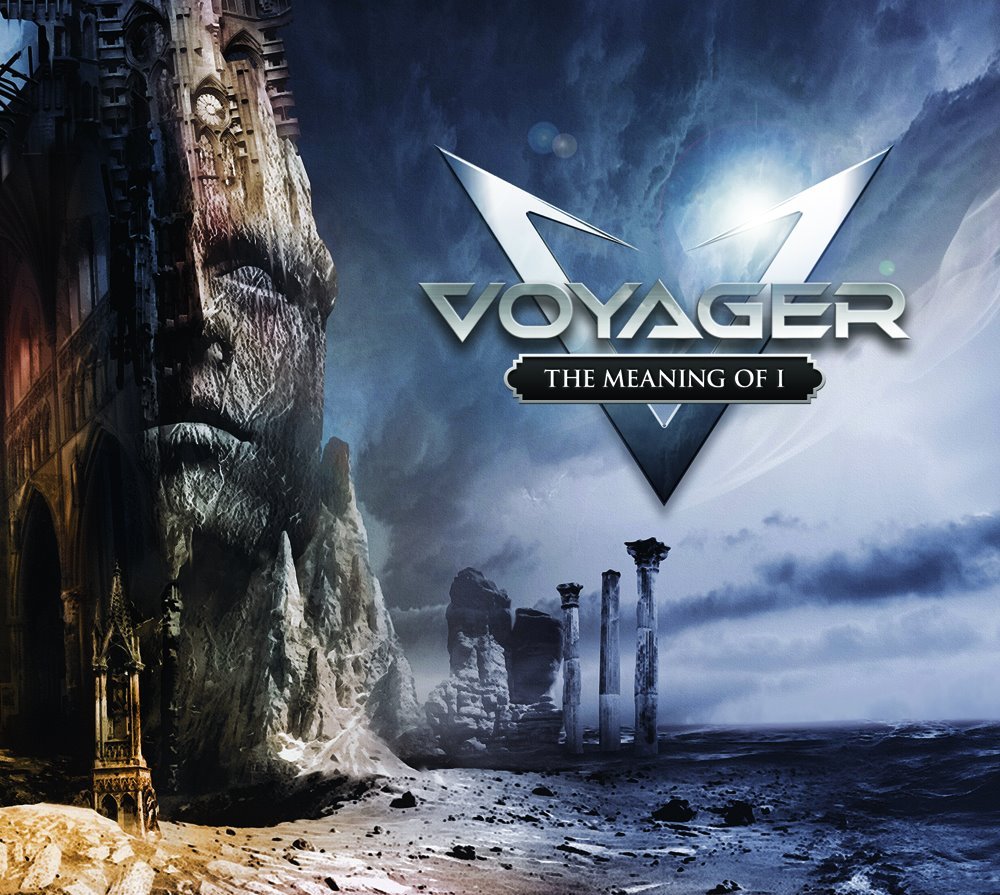
Voyager - The Meaning Of I

Voyager
The Meaning Of I
Riot! Entertainment/Warner Music Distribution

Over the course of three full-length efforts, long running Perth (Western Australia) based outfit Voyager have forged a unique sound for themselves, which in term has earned considerable praise and success both nationally and internationally. Two years after the release of ‘I Am The ReVolution’, the five piece act (Comprising of vocalist/keyboardist/founder Daniel ‘Nephil’ Estrin, guitarists Simone Dow and Scott Kay, bassist/vocalist Alex Canion and drummer Mark Boeijen) has returned with their fourth and latest effort ‘The Meaning Of I’. And as expected, it’s another magnificent melodic metal album that sounds unlike anyone else within the Australian metal scene.
Having firmly established their sound over their last couple of releases, I really didn’t expect Voyager to present any real monumental shifts in sound and style with ‘The Meaning Of I’. And sure enough, there are no surprises here that give you the impression that this album is something completely different from what you would otherwise expect from Voyager. But having said that, the song writing here is so strong that you could forgive the band for finding it hard to improve upon perfection.
The opening track ‘Momentary Relapse Of Pain’ sees the band getting the album off to a heavier start, with the guitar riffing taking on higher prominence within the mix, while the underpinning progressive sounding keyboards provide plenty of constant support. But Voyager’s music has always been about strong song writing above anything else, and in that respect, the biggest factor on ‘Momentary Relapse Of Pain’ is the strong use of melodic chorus hooks and Estrin’s soaring vocals. All up, this song is a perfect introduction to Voyager’s latest effort.
Veering a little more towards the catchier side of their song writing, ‘Stare Into The Night’ and ‘Broken’ are infectious tunes that are near impossible to forget after a couple of spins, while tracks such as ‘Seize The Day’, the title track ‘The Meaning Of I’ and the heavier and driving closer ‘Are You Shaded?’ lean more towards the metallic and aggressive side of things (Especially with the occasional death growl to liven things up here and there), without losing any of the melodic charm of the band’s core song writing and overall sound.
But while most of ‘The Meaning Of I’ is fairly typical of what we’ve come to expect from Voyager these days, the album does have a couple of interesting new twists to offer listeners.
Former Tesseract vocalist Daniel Tompkins helps out briefly on the progressively edged ‘The Pensive Disarray’ (Which features some outstanding and emotive guitar work), while Royal Hunt front man D.C. Cooper adds his distinctive pipes to the powerful ‘Fire Of The Times’.
Elsewhere, the band pays tribute to the late Type O Negative/Carnivore vocalist Pete Steele on the truly awesome ‘Iron Dream (In Memoriam: Peter Steele)’ and the short ‘It’s Time To Know’, where the band manage to pull off the Type O Negative sound to perfection.
Over the band’s lengthy career, Voyager have notably improved and strengthened with each and every new album. And as expected, ‘The Meaning Of I’ is no different. While the steps forward in terms of song writing and shifts in sound aren’t quite as noticeable as they were between their other albums, it’s really an issue, because as I mentioned earlier, it’s damn near impossible to improve upon perfection. ‘The Meaning Of I’ is the exception to that rule. Simply put, this is Voyager’s best effort yet.

For more information on Voyager, check out - http://www.voyager-australia.com/

© Justin Donnelly

Monday, January 16, 2012

Duff McKagan - It’s So Easy (And Other Lies): The Autobiography

Duff McKagan
It’s So Easy (And Other Lies): The Autobiography
Orion Books/Hachette Media

When it comes to the Guns N’ Roses story, there isn’t that much to be said that hasn’t already been said. After all, tell-all biographies telling the rise and fall (And rise once again) of the legendary L.A. based act has already been covered in all its vivid and gory detail by authors such as Stephen Davis (2008’s ‘Watch You Bleed: The Saga Of Guns N’ Roses’) and Mick Wall (2007’s ‘W. Axl Rose: The Unauthorised Biography’), and not to mention from countless other writers throughout the years.
That’s not taking into account the fact that both former guitarist Slash and former drummer Steve Adler have themselves penned autobiographies telling their side of the story for readers in recent years (2007’s ‘Slash’ and 2010’s ‘My Appetite For Destruction: Sex, And Drugs, And Guns N’ Roses’ respectively). So when former bassist Duff McKagan announced his plans to lay down his side of the story in autobiographical form, I can’t say that I was desperate to rush out to the stores and buy it on its day of release. But as it so happens, having just finished my current read at the time, I found myself purchasing a copy of McKagan’s self-penned ‘It’s So Easy (And Other Lies): The Autobiography’, purely because there simply wasn’t anything else that really grabbed my attention. And despite my initial scepticism, I’m pleased to report that I’m damned glad I did.
Autobiographies seem to be all the rage these days, and more often than not, they’re simply an extended biography that fleshes out the human side of the subject, rather than keep the story balanced with the musical side of things of those involved. McKagan’s story is definitely one of the more balanced tomes I’ve read in years.
McKagan strangely enough begins his story in August 2010, where him and his wife are holding a backyard birthday party for his daughter Grace, who’s turning thirteen. It’s a short prologue into the autobiography, but it’s an entertaining one that shows that despite overcoming the many addictions that plagued a large part of his life, and being a member of one of the biggest (And notoriously dangerous) bands from the late ‘90’s, one of his biggest challenges today is not only being a father, but one that doesn’t in any way, shape or form, want to embarrass his daughter by being seen in the backyard, and who instead is happy to retreat inside the house to enjoy the party from a distance. It’s a funny story, but more importantly a genuinely touching one as well, and one that most parents with children of the same age can definitely relate to. McKagan might be a rock legend, but he’s also a loving parent who will sacrifice himself rather than embarrass his kids in front of their friends.
The prologue obviously serves as a precursor to the real story, and gives the book its premise where McKagan gets to thinking about his past, but only as far as the day when his demons (Not to mention his mortal frame) finally caught up with him, and he recounts the story behind his near-fatal pancreatic explosion in 1994. There’s nothing glamorous here within the first chapter, and McKagan tells it as it was, without pulling any punches.
From here, McKagan takes the reader back to the start of the story (Making a minor detour to the time when he almost died as a small kid, and leaving Seattle for the big time of L.A.), detailing his time growing up, his first musical influences, his family and the bands that helped shape and pave his way into musical stardom.
While the story is a fairly standard one of a musician fighting to make ends meet, all the while awaiting the opportunity to really make it in a real band destined for glory, McKagan’s recount of his life story really does have something to say more than most, and that’s a human story. Throughout every page, you can’t help but feel that while McKagan did go on to find fame and fortune in Guns N’ Roses, it’s only secondary to the real story of how he actually got there in the first place.
The book, while an easy read, is far too lengthy to detail here in all its magnificent glory. But the story McKagan’s takes the reader on details the rise and eventual fall of Guns N’ Roses (Where he himself takes on same of the blame due to a lack of open communication alongside his fellow band members), his failed first marriage (Where again he looks at himself, and not with kind regard) and the toll that drugs and alcohol took on him both mentally and physically (There’s an incredible picture in the middle of the book entitled ‘Bloated And Hopeless’ that really proves how bad things were at the time), and the denial that that he lived in for years (Especially throughout the early ‘90’s touring behind ‘Use Your Illusion I’ and ‘II’) before things finally came to a head in 1994.
For the most part, ‘It’s So Easy (And Other Lies): The Autobiography’ is pretty much everything what you would expect from a McKagan autobiography. But around the last third of the book, McKagan does something a lot of people don’t do in circumstances like these (Meaning rock stars writing autobiographies), and that’s detail what happened after hitting rock bottom. It’s here that McKagan really tells his story, and about his slow and gradual process of coming back into the real world through sobriety, and how he once again found the balls to again play music – and more importantly tour without fear of falling into the depths of addiction.
Although it isn’t generally my kind of thing, I couldn’t help but get swept up in the latter half of the book, and McKagan’s growing optimistic outlook on life after reconnecting with the simple things in life, and dedicating himself totally towards martial arts and cycling.
McKagan’s book is filled with a story that has all the essential ingredients to make it an addictive and easy read, and that’s tragedy, sorrow, remorse and an uplifting end where the protagonist (Being McKagan himself) finally defies the odds stacked against him to rise once again, stronger, wiser than ever before, and sober for the first time ever.
In the end, I don’t really feel like I’ve done justice to ‘It’s So Easy (And Other Lies): The Autobiography’. But if you’re after a great read on Guns N’ Roses from an insider’s perspective, and one that has a whole lot of human heart, some funny stories and leaves you feeling satisfied after completion, then look no further than this book.


For more information on Duff McKagan, check out - http://www.duff-loaded.com/.

© Justin Donnelly.